
Hidden histories. An 11-minute read, best with a first-flush Darjeeling.
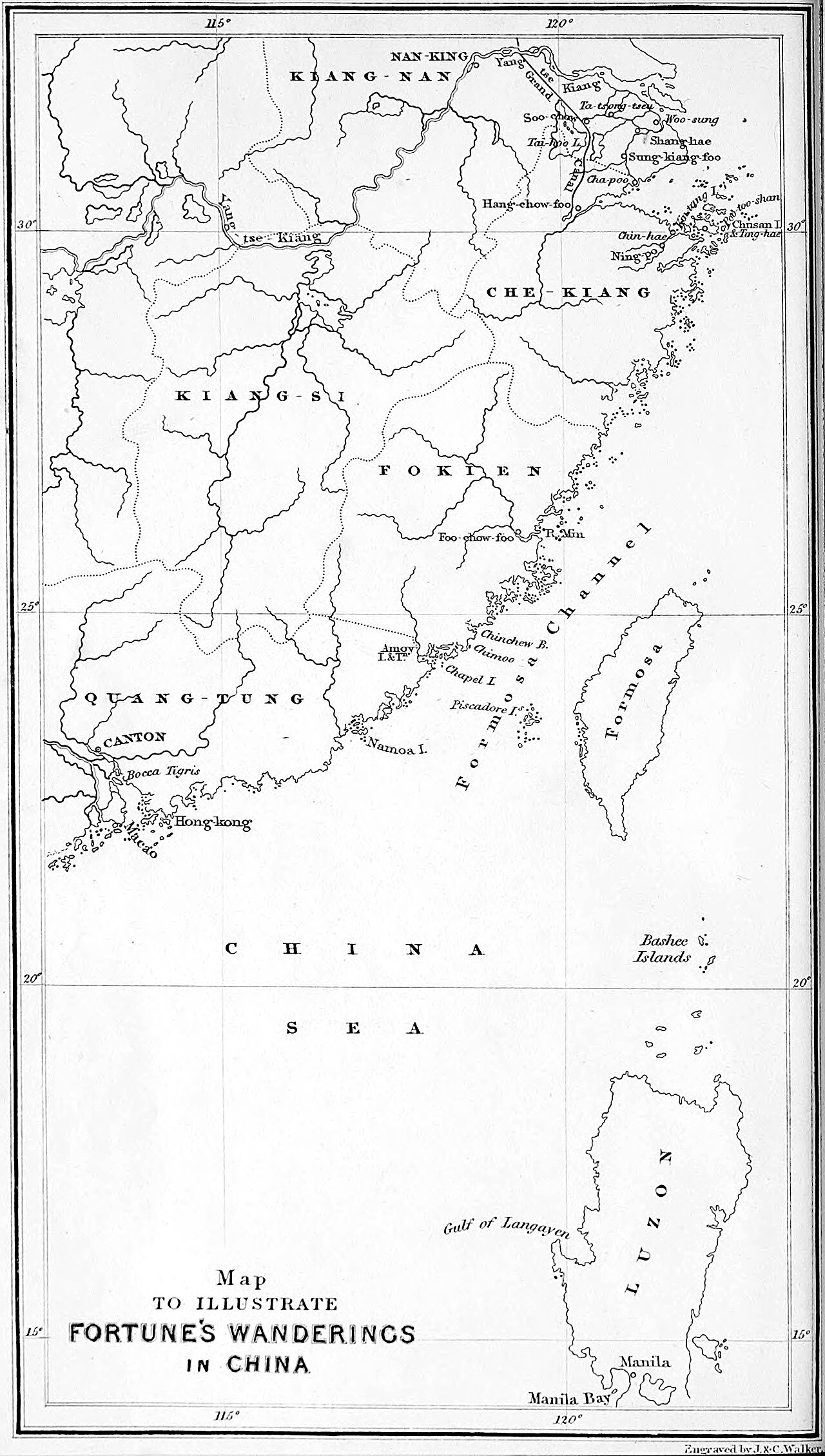
In the middle of the nineteenth century, almost every cup of tea drunk in Britain came from China, and China guarded the secrets of growing and making it closely. The East India Company wanted its own supply, grown in British India. To get it, the Company needed plants, seeds and, above all, know-how. It sent a Scottish gardener.
A gardener from the Borders
Robert Fortune was born in 1812 near Duns in the Scottish Borders and trained as a gardener. After the Treaty of Nanking opened parts of China to foreigners in 1842, the Royal Horticultural Society sent him there to collect new plants. He would spend years in China between 1843 and 1861, and Western gardens owe him the kumquat and many varieties of tree peony, azalea and chrysanthemum.
The mission of 1848
In 1848 the East India Company asked Fortune for something far bolder: to travel into China’s tea-growing regions, deep in country where foreigners were not allowed, and bring back tea plants and the skills to process them. To pass unnoticed, he shaved his head, wore Chinese clothes and adopted the guise of a traveller from a distant province. His accounts describe close calls, local guides and long journeys into the green and black tea districts.
Keeping living plants alive on a months-long sea voyage was the other great challenge. Fortune’s solution was the Wardian case, a sealed glass box that worked like a miniature greenhouse. He sent thousands of seeds and seedlings to India this way, and he also persuaded skilled Chinese tea workers to travel there and teach the craft.
The twist in the tale
Fortune is often credited with single-handedly transforming the world’s tea trade, and his story makes a thrilling tale. The full picture is more interesting. Most of the Chinese plants he sent to the northwestern provinces of India died. What made Indian tea a success was largely a native variety growing wild in Assam, which local Singpho people had used for generations, together with the skills of the tea makers who travelled with Fortune’s plants. Historians have since cautioned against overstating his role.
The story of tea is rarely one person’s story. It is carried by many hands.
Still, Fortune’s journeys mark a turning point. Within decades, tea gardens spread across Assam and Darjeeling, and later Ceylon, now Sri Lanka. The cup in your hand may well carry a little of his adventure in it.
Read further
- Fortune’s own account, A Journey to the Tea Countries of China, was published in 1852 and is freely available online.
- For All the Tea in China by Sarah Rose (2009) tells the story as a lively adventure, though some historians feel it overstates his part.
Map: Robert Fortune, 1852, public domain, via Wikimedia Commons. Sources include Undiscovered Scotland and the Royal Society for Asian Affairs.